---
title: "Maximizing Warehouse Space: Selecting the Right Bulk Bags for Pinto Beans"
description: Reduce warehouse footprint and prevent bag bulge. Learn why baffled bags are the ideal bulk bags for pinto beans.
image: https://blog.nationalbulkbag.com/hubfs/PB%20(1).png
---
Call Us Today! 1-888-237-4224|[info@nationalbulkbag.com](mailto:info@nationalbulkbag.com)
[](http://www.nationalbulkbag.com/)
- [HOME](https://www.nationalbulkbag.com/)
- [BULK BAGS](https://www.nationalbulkbag.com/fibc-bulk-bags/)
- [In-Stock Bulk Bags](https://www.nationalbulkbag.com/fibc-bulk-bags/)
- [Duffle Top Bulk Bags](https://www.nationalbulkbag.com/fibc-bulk-bags/duffle-top-bulk-bags/)
- [Spout Top Bulk Bags](https://www.nationalbulkbag.com/fibc-bulk-bags/spout-top-bulk-bags/)
- [Bulk Bags with Baffles](https://www.nationalbulkbag.com/fibc-bulk-bags/bulk-bags-baffles/)
- [Vented Bulk Bags](https://www.nationalbulkbag.com/fibc-bulk-bags/vented-bulk-bags/)
- [Food Grade Bulk Bags](https://www.nationalbulkbag.com/fibc/in-stock-food-grade-bulk-bags/)
- [Bulk Bags with Liners](https://www.nationalbulkbag.com/fibc/bulk-bags-liners/)
- [Bulk Bag Poly Liners](https://www.nationalbulkbag.com/products/bulk-bag-liners/bulk-bag-liners/)
- [Hemp Bulk Bags](https://www.nationalbulkbag.com/hemp-fibc-bulk-bags/)
- [Bulk Bag Filling Equipment](https://www.nationalbulkbag.com/products/bulk-bag-filling-equipment/ibc3000-fibc-bulk-bag-filler/)
- [FOOD GRADE FIBCS](https://www.nationalbulkbag.com/food-grade-bulk-bags/)
- [PRODUCE PACKAGING](https://www.nationalbulkbag.com/produce-packaging/)
- [Produce Packaging](https://www.nationalbulkbag.com/produce-packaging/)
- [Mesh Produce Bags](https://www.nationalbulkbag.com/produce-packaging/mesh-produce-bag/)
- [Potato Bags](https://www.nationalbulkbag.com/produce-packaging/potato-bag/)
- [Burlap Bags](https://www.nationalbulkbag.com/produce-packaging/burlap-bags/)
- [Custom Poly Bags](https://www.nationalbulkbag.com/produce-packaging/custom-poly-bags/)
- [Woven Polypropylene Bags](https://www.nationalbulkbag.com/produce-packaging/woven-polypropylene-bags/)
- [Netting Bags](https://www.nationalbulkbag.com/produce-packaging/netting-bags/)
- [V-board](https://www.nationalbulkbag.com/produce-packaging/gaylord-box/vboard/)
- [Gaylord Boxes](https://www.nationalbulkbag.com/produce-packaging/gaylord-box/)
- [BUYER TOOLS](https://www.nationalbulkbag.com/national-bulk-bag-resources/)
- [Blog](https://blog.nationalbulkbag.com)
- [Bulk Bags](https://blog.nationalbulkbag.com/topic/bulk-bags)
- [Food Grade Bulk Bags](https://blog.nationalbulkbag.com/topic/food-grade-bulk-bags)
- [Bulk Bag Safety](https://blog.nationalbulkbag.com/topic/bulk-bag-safety)
- [Bulk Bag Liners](https://blog.nationalbulkbag.com/topic/bulk-bag-liners)
- [Bulk Bag Industries](https://blog.nationalbulkbag.com/topic/bulk-bag-industries)
- [Bulk Bag Construction](https://blog.nationalbulkbag.com/topic/bulk-bag-construction)
- [UN Certified Bulk Bags](https://blog.nationalbulkbag.com/topic/un-certified-bulk-bags)
- [Pharmaceutical Bulk Bags](https://blog.nationalbulkbag.com/topic/pharmaceutical-bulk-bags)
- [Bulk Bag Buyer Tools](https://www.nationalbulkbag.com/national-bulk-bag-resources/)
- [Bulk Bag Construction Options](https://www.nationalbulkbag.com/bulk-bags/)
- [Bulk Bag Safety](https://www.nationalbulkbag.com/bulk-bag-safety/)
- [Bulk Bag Liners](https://www.nationalbulkbag.com/fibc-liners/)
- [Custom Bulk Bags](https://www.nationalbulkbag.com/custom-bulk-bag-design/)
- [Downloadable Resources](https://www.nationalbulkbag.com/national-bulk-bag-downloadable-resources/)
- [Types Of Bulk Bags A B C & D](https://www.nationalbulkbag.com/types-of-fibc-bulk-bags-a-b-c-d-explained/)
- [FAQ](https://www.nationalbulkbag.com/faq/)
- [Bulk Bag Glossary](https://www.nationalbulkbag.com/fibc-bulk-bag-glossary/)
- [Bulk Bag Industries](https://www.nationalbulkbag.com/bulk-bag-industries/)
- [UN Certified Bulk Bags](https://www.nationalbulkbag.com/un-certified-bulk-bags/)
- [ABOUT](https://www.nationalbulkbag.com/about-national-bulk-bag/)
- [About National Bulk Bag](https://www.nationalbulkbag.com/about-national-bulk-bag/)
- [Meet National Bulk Bag](https://www.nationalbulkbag.com/about-national-bulk-bag/meet-national-bulk-bag/)
- [Why Work With Us?](https://www.nationalbulkbag.com/why-work-with-national-bulk-bag/)
- [Worldwide Sourcing](https://www.nationalbulkbag.com/worldwide-sourcing-of-fibc-bulk-bags/)
- [GET QUOTE](https://www.nationalbulkbag.com/#book-a-demo-87520745-c6b8cd1f)
# Maximizing Warehouse Space: Selecting the Right Bulk Bags for Pinto Beans
[.png)](https://blog.nationalbulkbag.com/maximizing-warehouse-space-selecting-the-right-bulk-bags-for-pinto-beans)
Reduce warehouse footprint and prevent bag bulge. Learn why baffled bags are the ideal bulk bags for pinto beans.
Managing agricultural supply chains requires balancing strict food safety compliance with optimal warehouse space utilization. For operations managers handling high-volume agricultural products, choosing the right flexible intermediate bulk container directly impacts downstream logistics costs. When handling dry legumes, standard packaging choices often lead to a phenomenon known as bag bulge, which reduces warehouse footprint efficiency and compromises stack stability. Selecting specialized packaging can eliminate these costly operational bottlenecks and protect product integrity.
# What are the best Bulk Bags for Pinto Beans?
The best Bulk Bags for Pinto Beans are food-grade flexible intermediate bulk containers constructed from high-tensile, virgin woven polypropylene fabric. Because dry pinto beans are dense and flowable, the packaging must offer exceptional tear resistance and a certified Safe Working Load, typically ranging between 2,200 and 3,000 pounds. Selecting containers engineered specifically for agricultural commodities prevents product loss during rugged handling and shields the contents from ambient moisture during long-term storage or international transit.
## Why use Baffled Bags for dry bean storage?
Baffled Bags optimize dry bean storage by utilizing internal fabric panels sewn into the corners to prevent the container from bulging when filled. Standard bulk bags naturally round out under pressure, which creates unstable pallets and leaves excessive dead space in trucks or shipping containers. By maintaining a true square footprint, these specialized containers allow forklift operators to stack pallets higher and side by side with total confidence, increasing warehouse storage capacity by up to thirty percent.
Baffled Bags optimize dry bean storage by utilizing internal fabric panels sewn into the corners to prevent the container from bulging when filled. Standard bulk bags naturally round out under pressure, which creates unstable pallets and leaves excessive dead space in trucks or shipping containers. By maintaining a true square footprint, these specialized containers allow forklift operators to stack pallets higher and side by side with total confidence, increasing warehouse storage capacity by up to thirty percent.
Food-grade safety standards require agricultural bulk packaging to be manufactured in BRC-certified cleanrooms, adhering to Global Food Safety Initiative guidelines. For human consumption products like pinto beans, utilizing bags constructed from one hundred percent virgin polypropylene resin ensures compliance with strict Food and Drug Administration requirements. Supply chain professionals can mitigate contamination risks, protect brand value, and avoid regulatory inspection delays by verifying these quality certifications prior to bulk procurement.
## Streamlining the Agricultural Supply Chain
Achieving peak efficiency in agricultural logistics comes down to selecting packaging that works with facility infrastructure rather than against it. Transitioning to heavy-duty Baffled Bags for dry bulk handling minimizes transit damage, maximizes square footage, and ensures that shipments arrive intact and compliant. Evaluating current container performance against these structural and safety standards is a direct path to a more streamlined, cost-effective supply chain.
Balancing the physical demands of high-density commodity storage with rigorous compliance standards requires a deliberate packaging strategy. Prioritizing certified food-grade materials alongside dimensionally stable container designs allows facilities to successfully eliminate transit damage and warehouse inefficiencies simultaneously. Aligning daily bulk handling protocols with these specialized packaging advancements protects both product quality and bottom-line profitability over the long term.
By [Laura Heinen](https://blog.nationalbulkbag.com/author/laura-heinen)
June 26, 2026
[0 Comments](https://blog.nationalbulkbag.com/maximizing-warehouse-space-selecting-the-right-bulk-bags-for-pinto-beans#comments-listing)
#### Share This Story, Choose Your Platform!
- [Tweet](https://twitter.com/share)
#### About the Author: [Laura Heinen](https://blog.nationalbulkbag.com/author/laura-heinen)
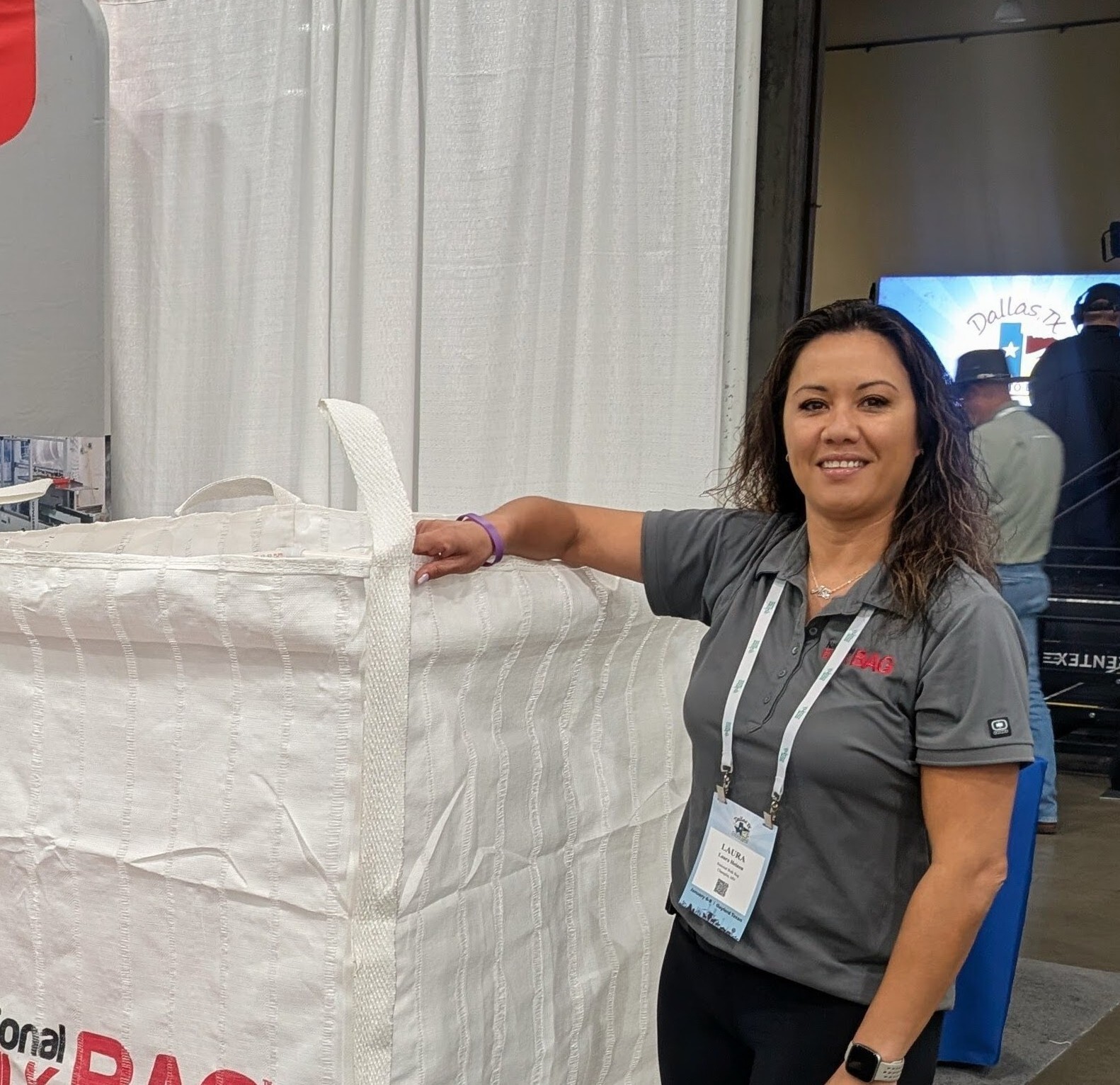
Laura Heinen is an FIBC expert and a recognized #BagLady in the industrial bag industry. With years of hands-on experience, Laura brings a practical, customer-focused perspective to bulk packaging, helping customers find the right bag, application, and solution for their operation. Known for her straight-shooting approach and deep industry knowledge, Laura believes the best packaging solutions are the ones that work—not just the ones that look good on paper. When she’s not talking FIBCs, you’ll probably find her talking packaging, solving customer challenges, and continuing to live up to her reputation as the #BagLady.
Search
### Blog Categories
- [Bulk Bags (62)](https://blog.nationalbulkbag.com/topic/bulk-bags)
- [Bulk Bag Construction (27)](https://blog.nationalbulkbag.com/topic/bulk-bag-construction)
- [Bulk Bag Industries (21)](https://blog.nationalbulkbag.com/topic/bulk-bag-industries)
- [Food Grade Bulk Bags (18)](https://blog.nationalbulkbag.com/topic/food-grade-bulk-bags)
- [Produce Packaging (14)](https://blog.nationalbulkbag.com/topic/produce-packaging)
- [Bulk Bag Safety (11)](https://blog.nationalbulkbag.com/topic/bulk-bag-safety)
- [Bulk Bag Liners (8)](https://blog.nationalbulkbag.com/topic/bulk-bag-liners)
- [Dumpster Bag (6)](https://blog.nationalbulkbag.com/topic/dumpster-bag)
- [UN Certified Bulk Bags (5)](https://blog.nationalbulkbag.com/topic/un-certified-bulk-bags)
- [Pharmaceutical Bulk Bags (2)](https://blog.nationalbulkbag.com/topic/pharmaceutical-bulk-bags)
- [Agriculture Packaging Companies (1)](https://blog.nationalbulkbag.com/topic/agriculture-packaging-companies)
- [Burlap Bags (1)](https://blog.nationalbulkbag.com/topic/burlap-bags)
- [Grinding Media (1)](https://blog.nationalbulkbag.com/topic/grinding-media)
- [firewood bags (1)](https://blog.nationalbulkbag.com/topic/firewood-bags)
#### Browse our 50+ in-stock bulk bags
We stock one of the largest FIBC Bulk Bag inventories in the United States. Whether you are packing chemicals, food, minerals, resin, sand, soil or any dry flow-able product, we stock or can manufacture a bag to meet your requirements.
### Subscribe to our blog updates

**National Bulk Bag** has over 75 different types of FIBCs in stock and a team of experts that are ready to help.
### Secondary Navigation
- [Blog](https://blog.nationalbulkbag.com/)
- [Privacy Policy](http://www.nationalbulkbag.com/privacy-policy/)
- [FAQ](http://www.nationalbulkbag.com/faq/)
- [Custom Bags](http://www.nationalbulkbag.com/custom-bulk-bag-design/)
- [Get Quote](https://offers.nationalbulkbag.com/get-a-free-bulk-bag-quote)
- [Industries](http://www.nationalbulkbag.com/bulk-bag-industries/)
- [In-Stock Bags](http://www.nationalbulkbag.com/fibc-bulk-bags/)
- [Why NBB?](http://www.nationalbulkbag.com/why-work-with-national-bulk-bag/)
- [Meet NBB](http://www.nationalbulkbag.com/about-national-bulk-bag/meet-national-bulk-bag/)
- [Bulk Bag Types](http://www.nationalbulkbag.com/types-of-fibc-bulk-bags-a-b-c-d-explained/)
### AN AFFILIATE OF
[](https://www.rapidpackaging.com/)
### CONTACT US
Toll Free: 1-888-237-4224
Fax: 1-888-237-3722
Email: [info@nationalbulkbag.com](mailto:info@nationalbulkbag.com?Subject=National%20Bulk%20Bag%20Inquiry)
Copyright © 2018 National Bulk Bag | All rights reserved
Powered by [Digital 1](http://www.digital1ne.com)
-
-
-
-