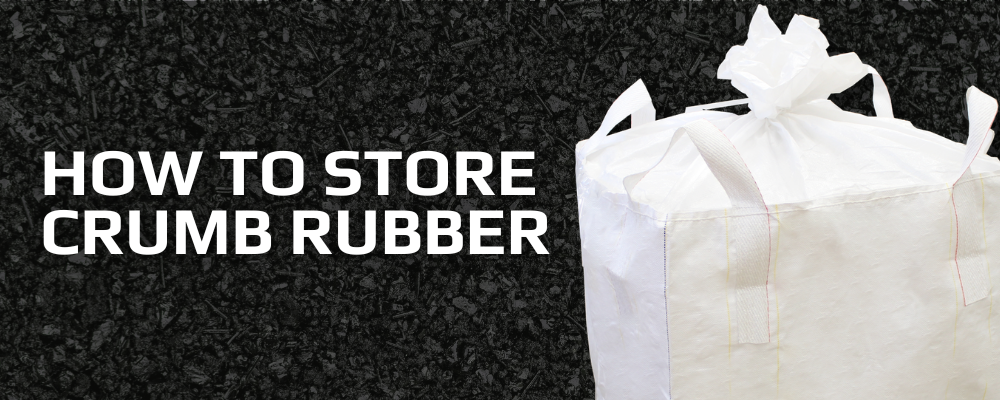
Proper storage of crumb rubber in bulk bags (FIBCs) plays a direct role in maintaining material quality, flowability, and long-term performance. Whether used in molded rubber products, playground surfacing, or asphalt modification, crumb rubber must be protected from contamination, moisture, and temperature extremes. Poor storage conditions can lead to clumping, inconsistent processing, or premature material degradation.
Select the Right Bulk Bag Design for Crumb Rubber
For most crumb rubber applications, a bulk bag with a Safe Working Load (SWL) of 2,200 lbs. is standard. This capacity supports efficient transport and storage without overloading handling equipment.
A duffle top design allows for easy filling and secure closure, helping reduce contamination and moisture intrusion during storage. A spout bottom provides controlled discharge, which is especially important when feeding crumb rubber into processing or blending systems. This configuration supports both operational efficiency and material containment.
Store Crumb Rubber in a Controlled Environment
Crumb rubber should be stored in a clean, dry warehouse whenever possible. While rubber is relatively stable, moisture intrusion can cause particle agglomeration and inconsistent feed rates. Keep filled FIBCs elevated on pallets and away from standing water or damp concrete floors.
Temperature control also matters. Ideally, crumb rubber should be stored in a moderate environment—generally between 40°F and 90°F (4°C to 32°C). Excessive heat can accelerate oxidation and reduce long-term stability. While freezing temperatures typically do not damage crumb rubber, extreme cold can make handling more difficult and increase static buildup during discharge.
For crumb rubber modified asphalt applications, avoid exposing material to temperatures above 150°C during heated storage or processing, as excessive heat can compromise binder stability.
Properly stored crumb rubber can maintain its quality for 3–5 years. Implement a first-in, first-out (FIFO) system to ensure consistent material performance and minimize aging risks.
Protect Crumb Rubber Against Contamination
Cleanliness is critical, particularly when crumb rubber is used in mold-making or bonding processes. Dirt or debris can interfere with adhesion and create defects in finished products. Ensure material is clean before filling FIBCs, and keep spouts tied when not in use. Store bags away from oils, chemicals, and airborne particulates.
How to Maximize Crumb Rubber Storage with Bulk Bags
Bulk bags provide flexibility that rigid containers cannot. When properly rated and filled within their SWL, they can be stacked (per manufacturer guidelines) to maximize warehouse space. This allows facilities to store more crumb rubber in a smaller area.
Empty bag storage is also efficient: a standard pallet can hold approximately 200 empty bulk bags, compared to roughly 50 Gaylord boxes on the same footprint. For operations managing variable inventory levels, this significantly reduces storage space requirements.
Maintaining Crumb Rubber in Bulk Bag Storage
Effective crumb rubber storage in FIBCs requires attention to capacity, temperature, cleanliness, and space management. With the right bag configuration and disciplined storage practices, facilities can protect material integrity and maintain consistent operational performance.
Looking for More Information?
Thanks for reading Crumb Rubber and Bulk Bags: Best Practices for Safe Storage.
The Buyer’s Guide to Purchasing Bulk Bags was created to help you make informed decisions. It covers bag types, their use, and what to know about safe handling and transport.
If you’re buying on behalf of your company, this guide gives you the facts you need—no fluff, just useful info.
Click below to download your free copy.